


Resumen: Los sistemas de control tradicionales se basan a menudo en reglas fijas y tienen dificultades para satisfacer las demandas dinámicas de los peces en las distintas fases de crecimiento. Un estudio publicado este mes en Aquaculture International muestra un sistema de inteligencia artificial adaptable capaz de "pensar" y "adaptarse" como un experto en acuicultura, lo que anuncia una transformación en la gestión de precisión de las piscifactorías.
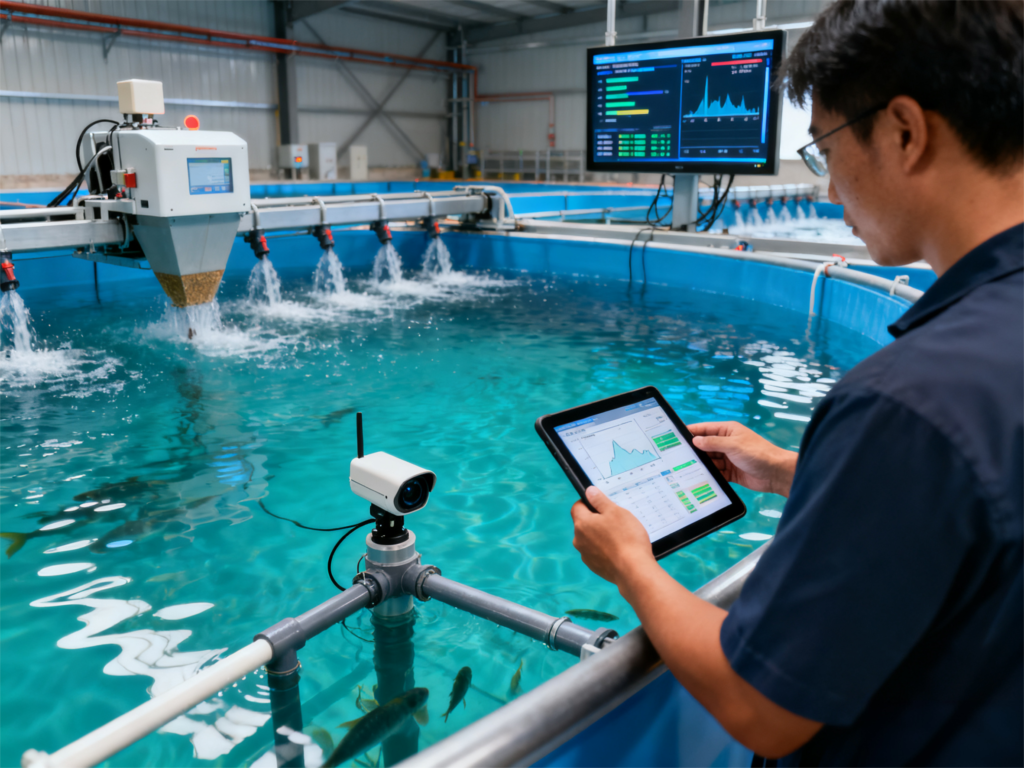
El reto central: A lo largo del ciclo de cultivo de 300 días de la tilapia, las necesidades fisiológicas y las prioridades de manejo durante las fases de alevinaje, crecimiento y precosecha son claramente diferentes. Por ejemplo, promover el crecimiento es primordial en la etapa inicial, mientras que mantener la calidad del agua para reducir el estrés se vuelve más crítico más adelante. Una única estrategia de control fija no puede seguir siendo óptima en todas las fases.
El avance tecnológico: Un marco jerárquico de gradiente político determinista profundo (DDPG)
El núcleo de la solución del equipo de investigación es una arquitectura inteligente de tres niveles:
Agentes de nivel inferior: Controle específicamente operaciones individuales como la tasa de alimentación, la tasa de aireación y la tasa de intercambio de agua.
Biblioteca política de nivel medio: Se entrenan tres estrategias optimizadas independientes para las tres fases clave de crecimiento de la tilapia (Días 1-100, 101-200, 201-300).
Metacontrolador de alto nivel: Funciona como un gestor de piscifactoría experimentado, utilizando datos monitorizados en tiempo real sobre el peso de los peces y la calidad del agua para determinar la fase de crecimiento actual y combinar o alternar estrategias sin problemas.
Resultados verificados y conocimientos profesionales
El sistema fue validado durante 300 días en una instalación comercial de RAS, superando significativamente a los métodos tradicionales:
Beneficios económicos notables: El índice de conversión de piensos mejoró en 18,7%, los costes de alimentación se redujeron en 18,8% y la biomasa final aumentó en 7,6%.
Excepcional estabilidad al agua: Los parámetros clave de calidad del agua, como el oxígeno disuelto y el nitrógeno amoniacal, se mantuvieron dentro del intervalo óptimo durante el 98,3% del tiempo.
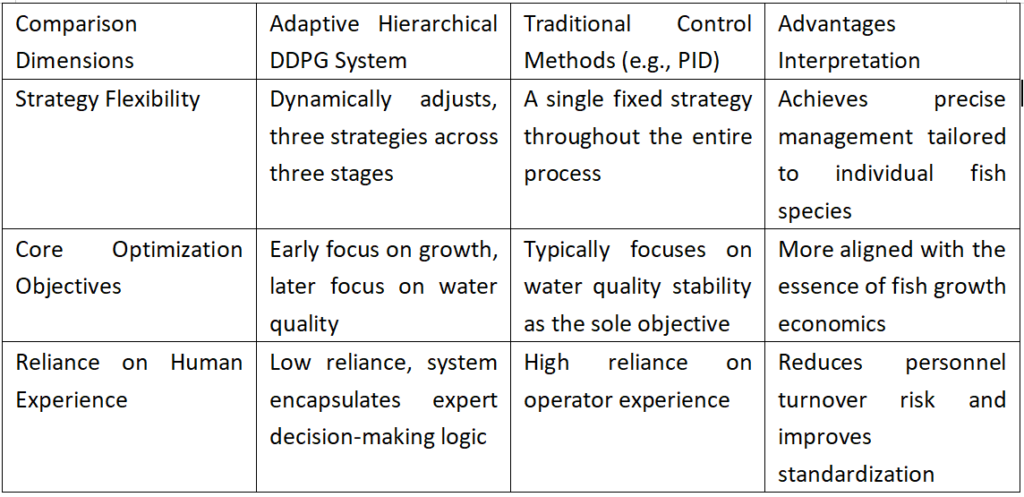
Perspectiva del experto: El aspecto revolucionario de esta tecnología reside en su "explicabilidad". El sistema no sólo toma decisiones, sino que también utiliza "árboles de decisión" y "visualización de la atención" para mostrar a los operarios de la granja por qué se ha tomado una decisión (por ejemplo, reducir automáticamente la tasa de alimentación debido a una concentración crítica de amoníaco). Los estudios de usuarios indican que esto aumenta significativamente la confianza de los operarios en el sistema y acelera su comprensión de los principios clave de gestión.
Puntos clave para la aplicación agrícola:
Evaluación de la aplicabilidad: Esta tecnología es especialmente adecuada para especies con ciclos de cultivo largos y necesidades de gestión específicas de cada fase (por ejemplo, salmón/trucha, lubina, mero).
Preparación de datos: Su aplicación requiere datos históricos precisos y a largo plazo sobre el crecimiento de los peces y la calidad del agua para entrenar los modelos de IA.
Aplicación por fases: Las explotaciones pequeñas y medianas pueden empezar por adoptar el concepto de "gestión diferenciada por etapas de crecimiento", estableciendo manualmente normas de calidad del agua y alimentación distintas para cada etapa, sentando las bases para una futura integración con sistemas inteligentes.
Abordar los puntos débiles de la transición: Durante las transiciones de las fases de crecimiento, el tiempo de ajuste del sistema se redujo en 42,5%, lo que evitó el estrés de los peces causado por las drásticas fluctuaciones ambientales.
 ES
ES  EN
EN  FR
FR