
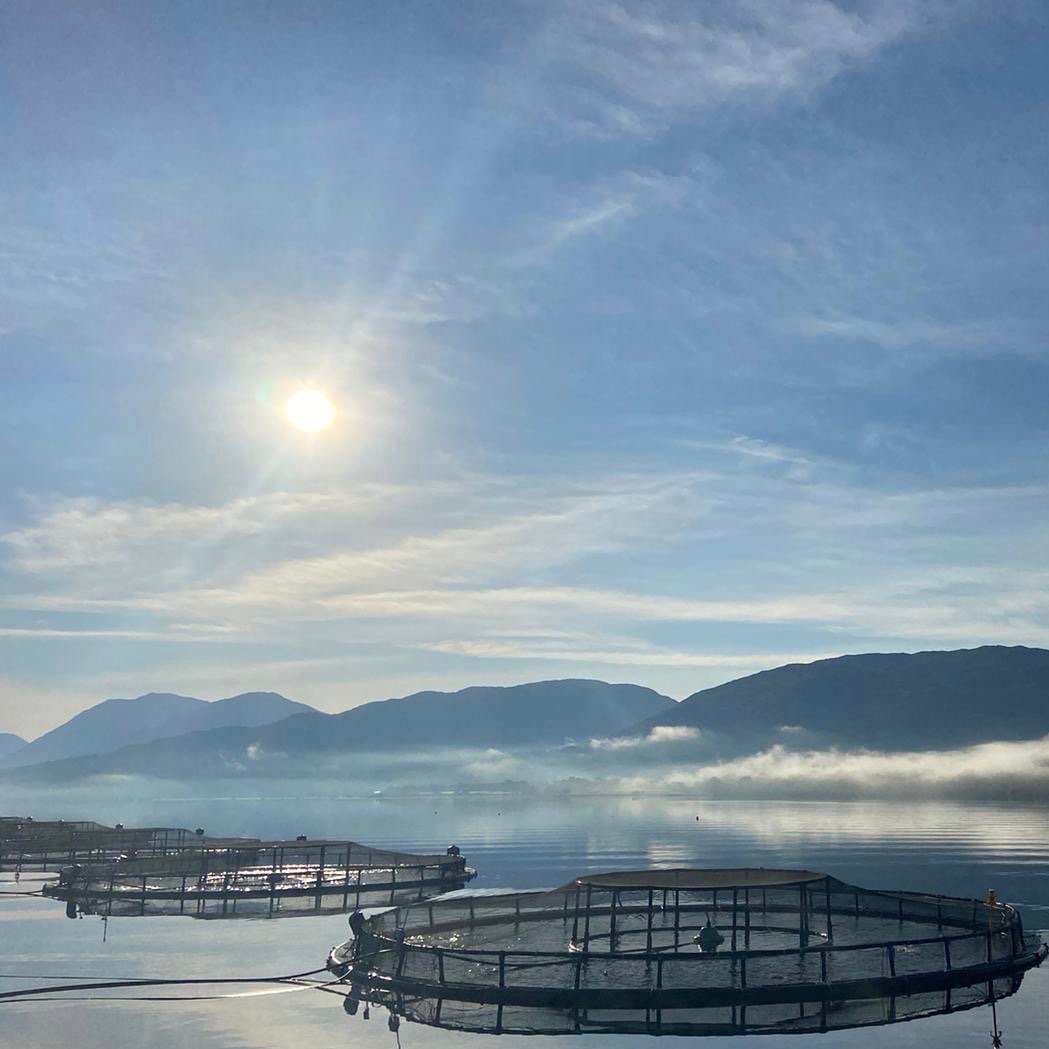

Leading companies like Mowi and SalMar continue to push aquaculture operations farther offshore. Their global site selection strategy is underpinned by a rigorous evaluation framework. This article deconstructs the core considerations of this logic to provide an analytical model for identifying the next high-potential marine areas.
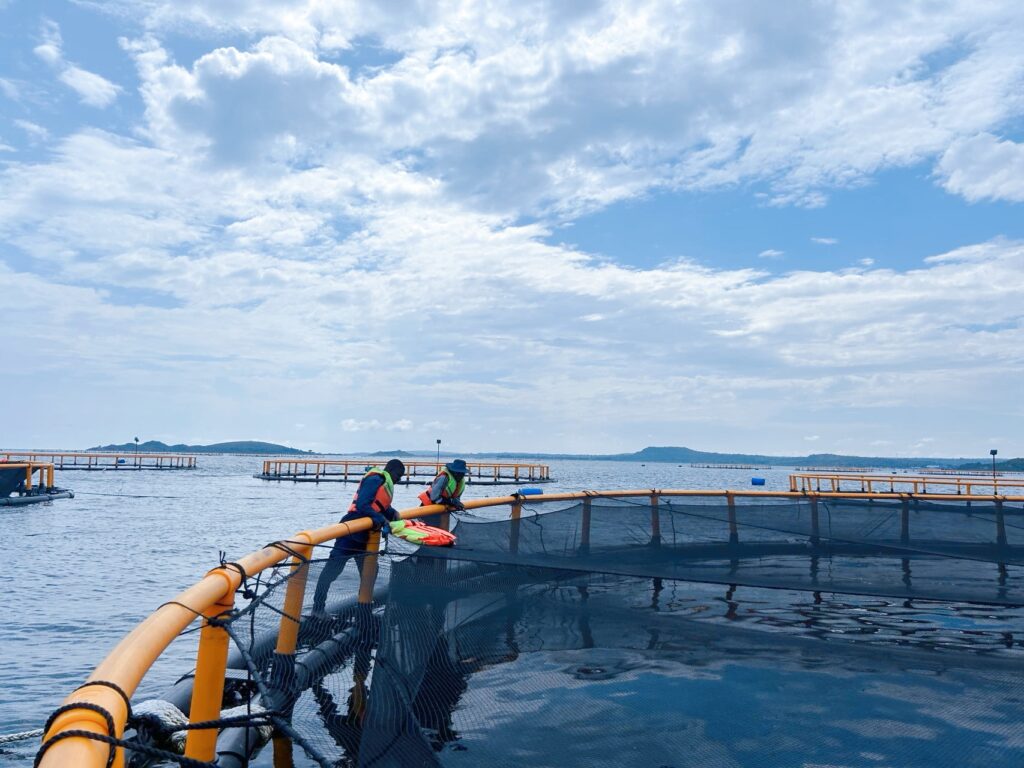
New Trends Among Industry Leaders: Expanding from the North Atlantic
Recent industry developments indicate that major Norwegian salmon producers are looking beyond their domestic fjords:
Mowi is continuously evaluating new project opportunities in North America (e.g., Newfoundland Canada, Maine USA) and Europe (e.g., Scotland, Ireland).
SalMar, through operations like “Ocean Farm 1,” has gained valuable experience from exposed farming projects and is eyeing further international expansion.
The common thread is a strategic shift away from traditional nearshore zones. These companies are targeting new, expansive marine areas that meet stringent criteria for large-scale, industrial offshore pen farming. This represents not blind expansion, but the application of a sophisticated “site selection algorithm.”
The “Four-Dimensional Assessment” Framework for Prime Open-Waters
Analysis of leading projects and industry reports reveals that a successful offshore aquaculture site must typically pass a multi-faceted evaluation across four key dimensions:
1. Environmental & Ecological Dimension (The Foundational Prerequisite)
Hydrographic Conditions: Suitable temperature range (dictating growth rates and energy costs), strong water exchange and current flow (ensuring dissolved oxygen (DO) and waste dispersal), and sufficient depth (typically >30 meters to facilitate effluent dispersion).
Shelter & Wave Exposure: Frequency and intensity of extreme weather events (typhoons, winter storms) must be assessed, as these directly impact cage structure integrity and operational uptime.
Ecological Compatibility: Sites must avoid critical ecological reserves, key migration corridors, and potential impacts on local ecosystems must be evaluated.
2. Biological & Operational Dimension (The Core of Production Efficiency)
Disease & Biosecurity: Ideal sites are distant from existing dense farming areas to minimize cross-contamination risks (e.g., sea lice transmission), creating natural biosecure zones.
Production Performance Forecasting: Historical data and modeling are used to predict key metrics like growth rates and feed conversion ratio (FCR) for the target species, which are fundamental to project economics.
3. Infrastructure & Logistics Dimension (The Key to Cost Control)
Port & Service Support: Proximity to a port with handling equipment, storage, and maintenance capabilities is essential for daily operations: feeding, crew changes, equipment servicing, and harvest transport.
Cold Chain & Processing: Access to nearby processing plants or efficient cold-chain logistics is crucial for maintaining product freshness and minimizing post-harvest losses.
4. Regulatory & Social Dimension (The License to Operate)
Clear Maritime Spatial Planning & Licensing: Is there a government-zoned area for aquaculture? Is the permitting process transparent, stable, and non-discriminatory? This is the fundamental prerequisite for legality.
Social License to Operate: Acceptance by local fishing communities, environmental groups, and the public is critical. Transparent communication and benefit-sharing mechanisms (e.g., job creation) can significantly mitigate social risk.
Political & Policy Stability: Long-term investments require a stable political environment and consistent industry policy support.
Analysis of Prospective Regions and Future Outlook
Applying the above framework, key regions currently garnering industry attention include:
Peripheral North Atlantic Waters: Areas like the Faroe Islands, Iceland, and Eastern Canadian waters. These offer excellent cold-water temperatures, relatively low historical exposure to farmed fish diseases, and, in some cases, receptive government policies.
Specific EEZ or High-Seas Areas: Some nations are evaluating deep-water zones far offshore within their Exclusive Economic Zones. This involves more complex international maritime law and management regimes, representing a long-term frontier.
Open Waters in Emerging Markets: Examples include offshore areas beyond the southern Chilean fjords or sheltered deep-water lees of islands in Southeast Asia. The primary challenges here often relate to underdeveloped infrastructure and local market cultivation.
Conclusión
Identifying “Prime Open-Waters” is a complex, interdisciplinary endeavor integrating science, economics, and policy. For companies aiming to secure a future position, the actionable recommendation is to form a cross-disciplinary team (oceanography, biology, engineering, economics, policy) and employ this “Four-Dimensional” framework to conduct systematic, quantitative assessments and risk-ranking of potential sites. The direction set by industry leaders is clear. The true opportunity belongs to those who can use rigorous analysis to discern value in the open ocean and possess the capability and patience to turn that vision into a viable operation.
 ES
ES  EN
EN  FR
FR