

For marine net-pen aquaculture of species such as salmon, sea lice are universally recognized as the primary adversary. With increasing chemical resistance and tightening environmental regulations, the industry is accelerating its transition into a new phase of “non-chemical control.” In the future, integrated management capabilities will become a core competitive barrier for farming enterprises.
Currently, the mainstream, commercially validated non-chemical strategies fall primarily into three categories:
Laser Robots: The “Sniper” for Precision Strikes
Principle & Technological Advances: These systems use high-definition cameras to identify sea lice and emit low-intensity laser pulses for precise ablation, leaving the host fish unharmed. The latest generation of equipment incorporates 3D identification and predictive trajectory functions, significantly improving hit rates even in turbid water. Systems represented by Stingray and LiceBot can process tens of thousands of fish per unit per day.
Practical Considerations: This represents a high CAPEX (Capital Expenditure) investment but features lower OPEX (Operational Expenditure). Its efficacy depends on pen layout, water visibility, and operational maintenance standards. It is best suited as a continuous, background control layer to suppress lice populations below threshold levels over the long term.
Cleaner Fish Symbiosis: The Natural “Attendant”
Principle & Technological Advances: This primarily involves species like wrasse, which pick and consume sea lice from host fish. Success hinges on far more than “simple polyculture” and involves:
Species and Size Selection: Must be compatible with the size of the farmed fish.
Stocking Ratio and Timing: Typically 5%-10%, introduced before the peak sea lice season.
Welfare Assurance: Requires dedicated shelter structures for cleaner fish and ensuring their supplemental nutritional needs are met.
Practical Considerations: This is a biocontrol method, not an eradication tool. Its effectiveness is highly influenced by water temperature and cleaner fish acclimation success rates, demanding meticulous management. While it reduces the frequency of other treatments, it presents its own survival rate challenges.
Functional Netting: The Passive “Physical Barrier”
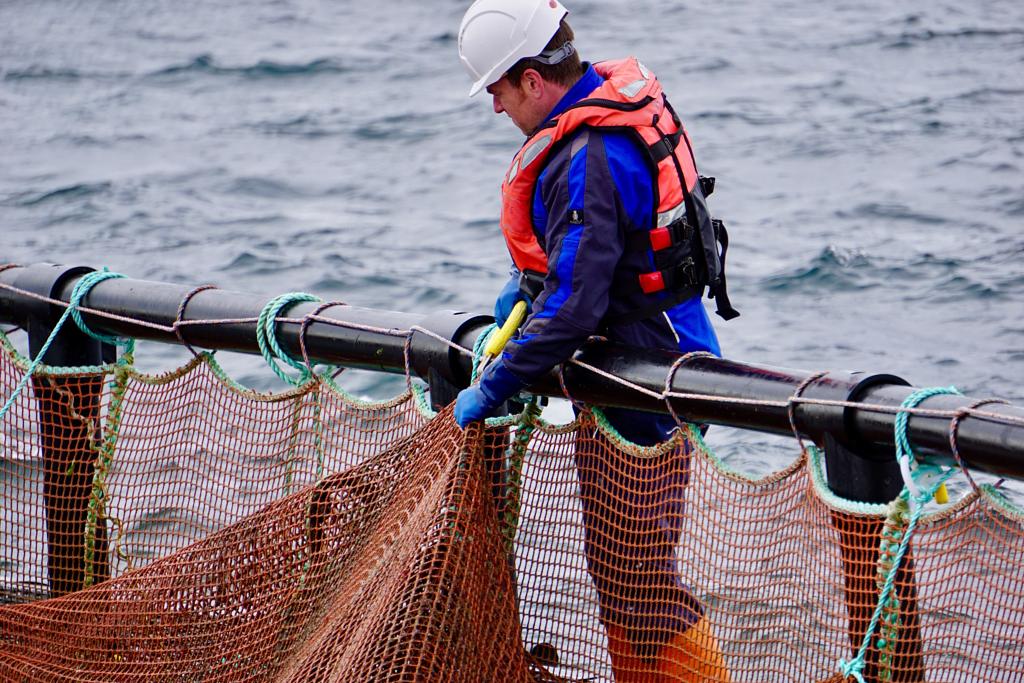
Principle & Technological Advances: This mainly includes “copper-alloy netting” y “silicone-coated netting.” Copper ions effectively repel sea lice, while advanced silicone coatings create an extremely smooth surface that hinders the attachment of sea lice larvae. Both can significantly reduce the exchange and concentration of sea lice within the pen.
Practical Considerations: Copper netting carries a very high cost and requires long-term environmental monitoring of metal leaching. Silicone netting offers excellent anti-fouling properties but requires attention to its physical durability under real-world wave and current forces. Both are infrastructure-level solutions that must be considered early in the planning of new projects or net replacement cycles.
Industry Consensus & Recommendations:
There is no single “silver bullet.” Leading farming companies are now constructing a “multi-layered defense system”: using functional netting as the first barrier, laser robots for daily continuous cleaning, cleaner fish as an ecological supplement, and supplementing with physical treatments like thermal or freshwater baths when necessary (e.g., during sudden outbreaks). Investment decisions should shift from single-equipment procurement to the holistic design of a control strategy based on specific site conditions and production plans. This represents not merely a technological upgrade but a profound transformation in management philosophy.
 ES
ES  EN
EN  FR
FR