
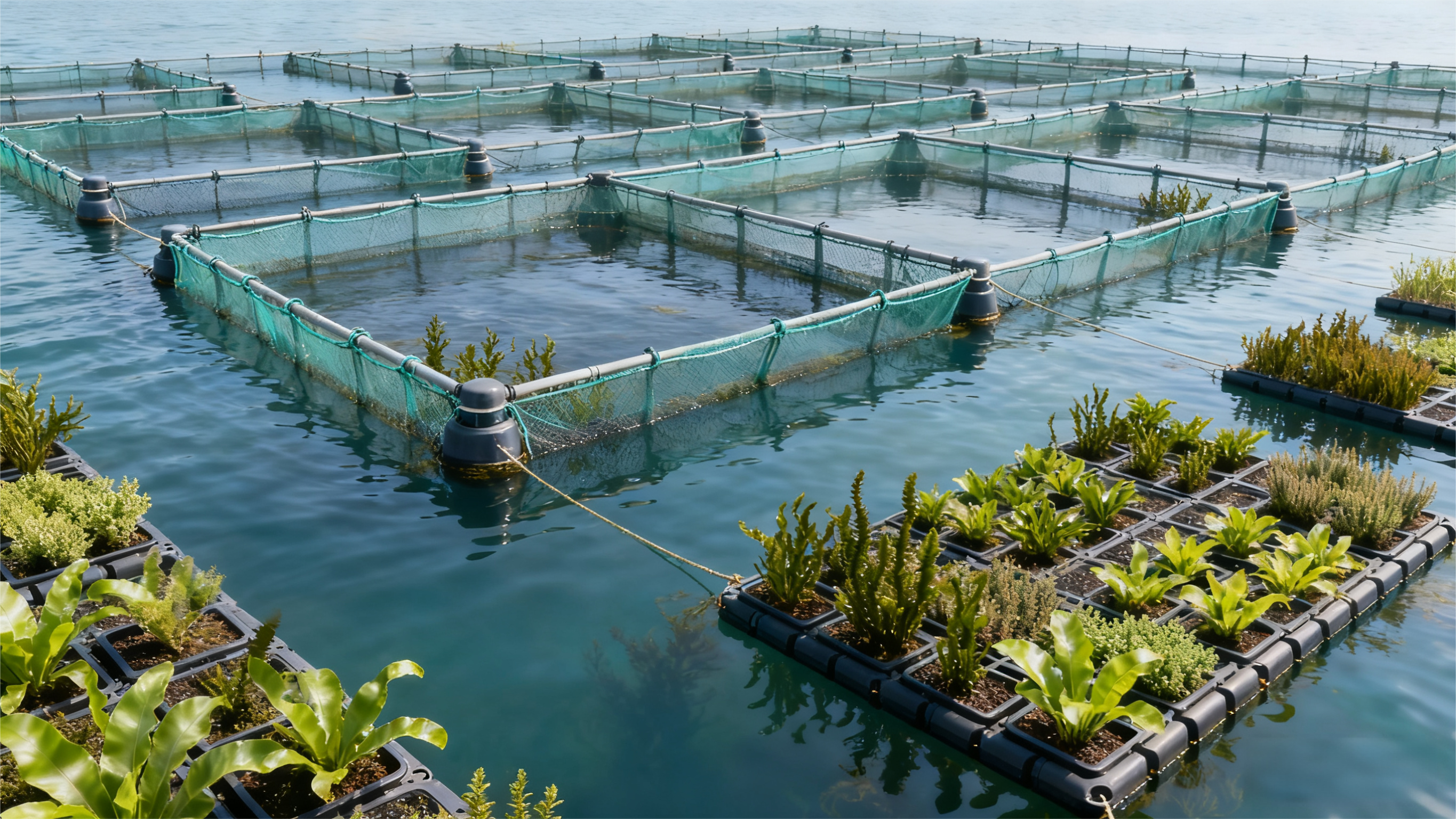

The green development of deep-sea cage aquaculture must systematically consider the ecological carrying capacity of the farming area and tailwater treatment. Constructing an environmentally friendly farming model is key to the sustainable development of the industry.
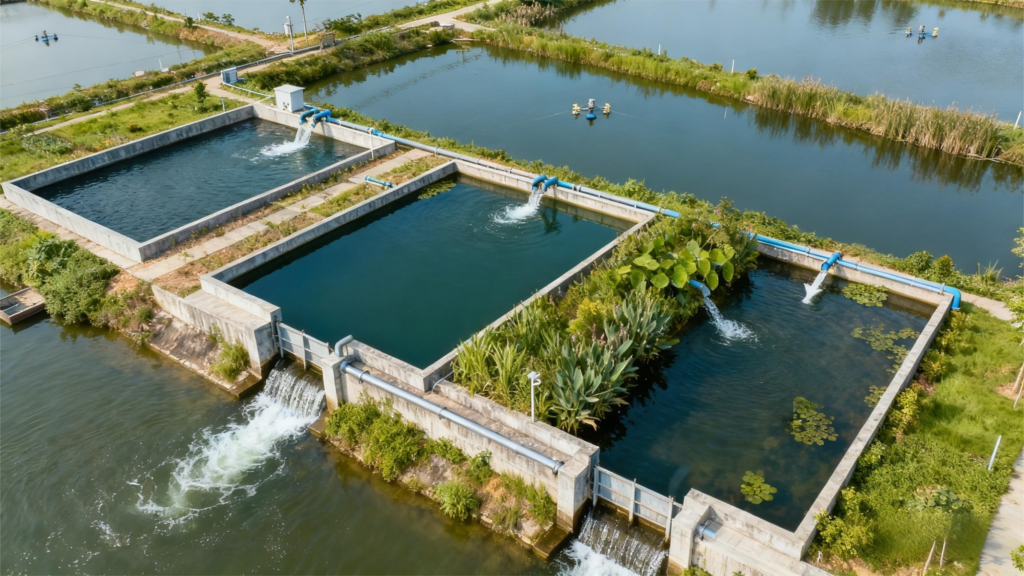
Tailwater Treatment Solutions
Land-Based Treatment: Adapt the “Three Ponds and Two Dams” tailwater treatment model from pond aquaculture for the shore-based facilities supporting deep-sea cages:
Process: Sedimentation Pond → Aeration Pond → Biological Treatment Pond → Ecological Purification Pond.
Removal Rates: Suspended Solids ≥85%, Total Nitrogen ≥70%, Total Phosphorus ≥80%.
In-Situ Marine Purification: Deploy ecological floating beds around the cage farming area, planted with aquatic vegetation such as Hydrilla verticillata and Sesuvium portulacastrum:
Nitrogen & Phosphorus Absorption Efficiency: 5-8 g/m² per day.
Recommended Ratio: Farming Area : Purification Area = 10:1 to 15:1.
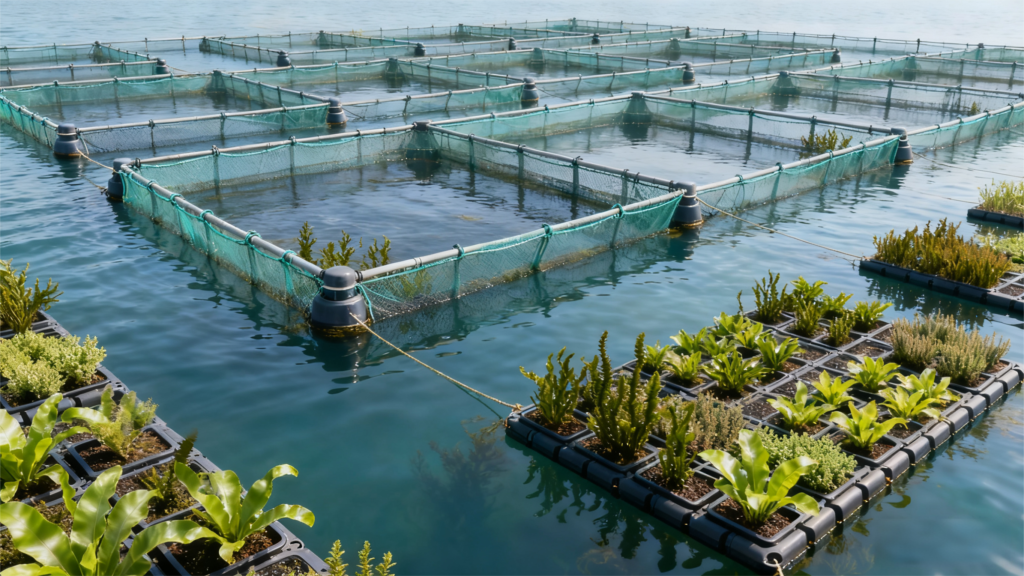
Ecological Optimization Technologies
Integrated Multi-Trophic Aquaculture (IMTA):
System: Fish in cages + Filter-feeding shellfish cultivated in the surrounding waters + Seaweed.
Benefit: Effectively utilizes fish feed residue and excretions, improving overall system material utilization by approximately 30%.
Artificial Reefs:
Method: Place artificial reef structures on the seabed beneath cages to provide substrate for sessile organisms.
Benefit: Increases biodiversity and enhances the water body’s self-purification capacity.
Implementation Recommendations
New Projects: Incorporate the tailwater treatment system during the design phase, reserving 10-15% of the area for ecological purification.
Existing Projects: Retrofit by adding ecological floating beds, installing mobile treatment units, etc.
Monitoring System: Establish an online water quality monitoring system, focusing on key indicators such as Dissolved Oxygen (DO), Ammonia Nitrogen, and Nitrite.
 EN
EN  ES
ES  FR
FR