

Abstract: Traditional RAS management relies on monitoring average group data (e.g., average weight, overall feeding behavior), yet diseases or growth stunting often begin with individual fish. A new project funded by the U.S. Department of Agriculture aims to overcome this limitation. Utilizing advanced imaging and artificial intelligence, it seeks to achieve contactless, individual identification and health tracking for every salmon within a closed-containment “Bluehouse” RAS.
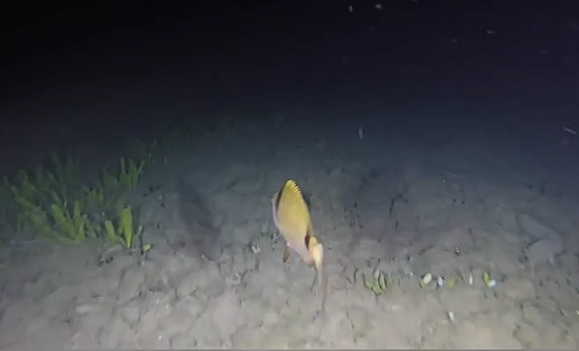
Technical Principle: Creating a “Biometric ID” for Each Fish
The project team has developed an underwater high-definition imaging system. As fish swim through a specific channel, the system captures high-resolution images. An AI algorithm analyzes dozens of unique biological features for each fish—such as distinct skin spot patterns, fin morphology, and body contours—to create a unique “facial recognition” profile. By cross-referencing with data from implanted PIT tags, the system can already identify specific individuals within the school with high accuracy.
Beyond Identification: Moving Towards Precision Health Monitoring
The higher-order application of this technology lies in early health warning:
Injury and Stress Identification: Using multispectral imaging, the system can detect subtle changes in skin coloration and blood flow caused by abrasions, infections, or stress. These changes, often imperceptible to the human eye, serve as early indicators of disease.
Individual Growth Curves: Through repeated identification, precise growth trajectories can be charted for each fish. This allows for the timely detection of “laggards” and analysis of the reasons behind their deviation from the group (e.g., competitive disadvantage, subclinical infection).
Industry Application Prospects
Precision Feeding: Based on individual size and growth rate, future systems could use smart gate mechanisms to divert different individuals to separate zones for differentiated feeding, thereby improving overall feed efficiency.
Early Disease Prevention and Control: Once an individual exhibiting abnormal behavior or early signs of lesions is identified, it can be automatically isolated immediately, preventing disease outbreaks in the intensive farming environment.
Optimized Breeding Selection: In broodstock cultivation, this enables the seamless and continuous collection of individual growth and disease resistance data, providing unprecedented support for selecting parent fish with superior traits.
Outlook: This developing technology represents one of the ultimate directions for data-driven RAS management—refining the management granularity from “a tank of fish” to “every single fish.” It promises to significantly enhance predictability in farming, animal welfare standards, and overall production efficiency. As hardware costs decrease and algorithms mature, individual tracking is poised to become a standard feature in future high-end RAS operations.
 EN
EN  ES
ES  FR
FR