
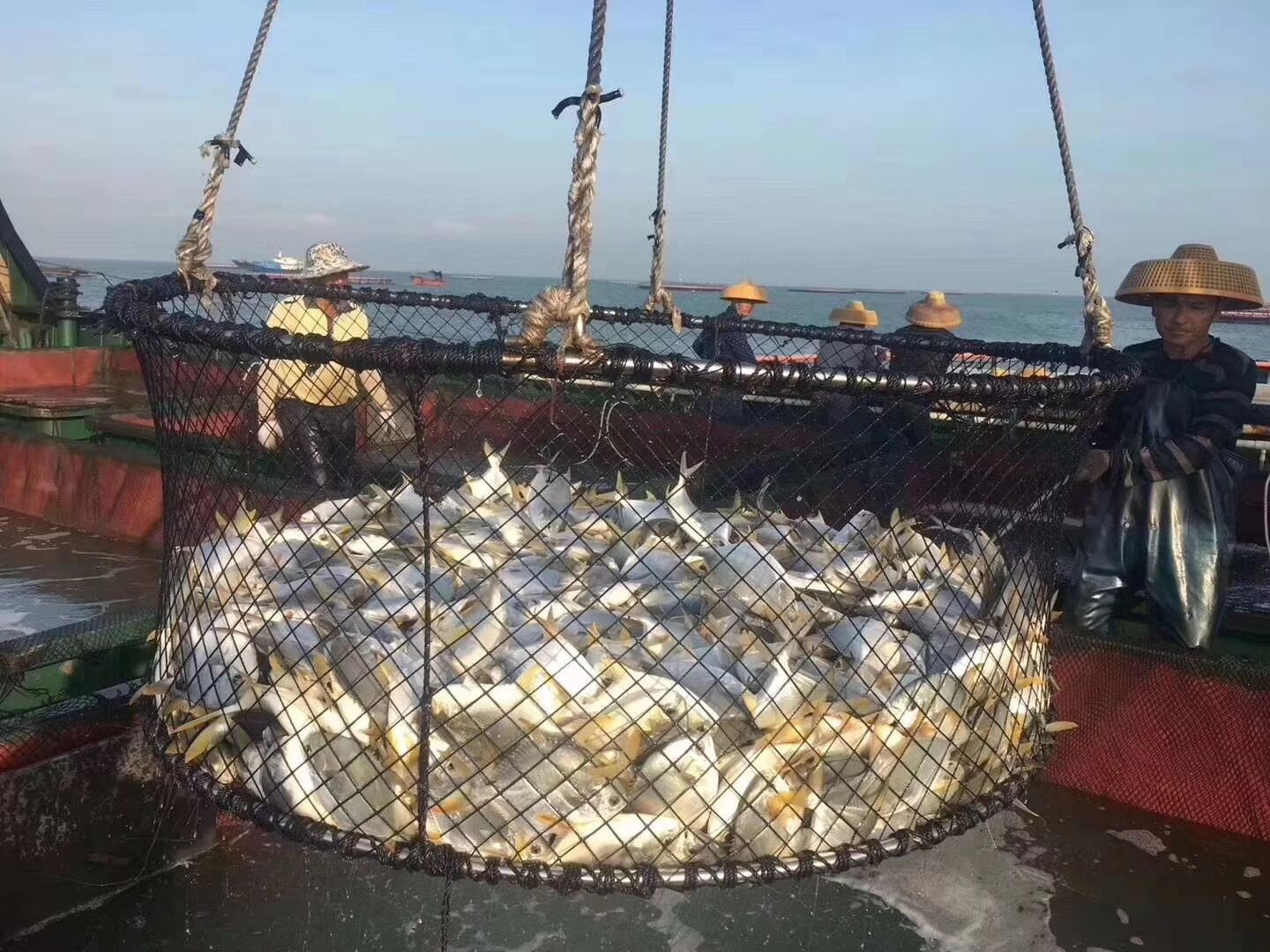

Traditional aquaculture has long grappled with challenges such as dependence on weather conditions and experience-based management. The container-based “intelligent self-contained system”, which integrates IoT (Internet of Things), AI (Artificial Intelligence), and RAS (Recirculating Aquaculture System) technologies, is driving the industry toward a profound transformation centered on “data-driven decision-making.” This shift represents not merely a technological upgrade but a systematic overhaul of production models and profitability logic.
A Direct Comparison: The Leap from “Labor-Intensive” to “Intelligent Control”
The following data clearly illustrates the fundamental differences between the two paradigms:
| Aspect | Traditional Pond/Open Net Pen Culture | Container-based Intelligent RAS | Difference & Advantage Analysis |
| Water Consumption | High water exchange; dozens of cubic meters per kg of fish produced. | Water recirculation rate >95%; reduces water usage by over 90%. | Core Environmental Advantage: Near-zero effluent, unaffected by drought or discharge restrictions. |
| Land/Facility Footprint | Requires extensive water surface or land; difficult on non-agricultural land. | Modular design; output of one standard container (≈30 m²) ≈ 1 traditional Chinese mu (≈0.067 hectares) of pond. | Land Liberation: Deployable in warehouses or on marginal land, enabling urban periphery and land-based aquaculture. |
| Production per Unit Volume | Limited by environment; low stocking density (e.g., pond-reared largemouth bass: 11,250-22,500 kg/hectare). | Controlled environment enables high stocking density (e.g., container-reared largemouth bass: ≥120 kg/m³). | Productivity Leap: Yield per unit volume is 10-15 times that of traditional models. |
| Risk Management | High risk from disease, weather, and sudden water quality changes; losses are unpredictable. | Fully enclosed environment blocks pathogens; AI-powered real-time alerts reduce disease-related losses by >70%. | Stability Guarantee: Enables year-round continuous production, eliminating weather dependency. |
| Management Dependency | Relies heavily on experienced workers; labor-intensive and difficult to standardize. | “Unmanned” operation possible; one person can manage dozens of containers; decisions are data-based. | Cost Reduction & Efficiency Gain: Significantly lowers labor costs and management complexity, enabling standardized output. |
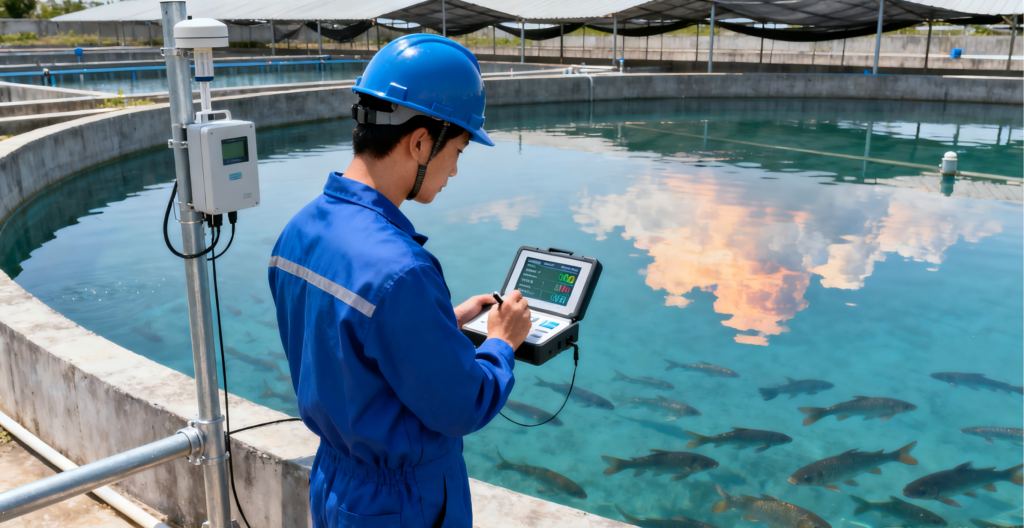
Core Analysis: How IoT Enables the “Monitor-Analyze-Decide-Act” Loop
The essence of the intelligent system lies in creating a precise, self-regulating operational loop:
Comprehensive Sensing (Monitor): Sensors for pH, dissolved oxygen (DO), total ammonia nitrogen (TAN), along with underwater cameras and sonar, act as the system’s “nerve endings,” collecting water quality and fish behavior data 24/7.
Intelligent Analysis (Analyze): A cloud platform integrates data. AI models perform dual analysis: first, water quality prediction and early warning (e.g., forecasting oxygen depletion hours in advance); second, AI vision recognition to analyze feeding intensity in real-time and identify early disease signs (e.g., abnormal swimming).
Precision Automation (Decide & Act): The system automatically executes commands: activating aerators, adjusting water temperature; controlling automatic feeding robots to provide “frequent, small meals” based on appetite; and initiating targeted treatment cycles at the earliest sign of disease. This process transforms the experienced farmer’s “observation and intuition” into replicable and optimizable data algorithms.
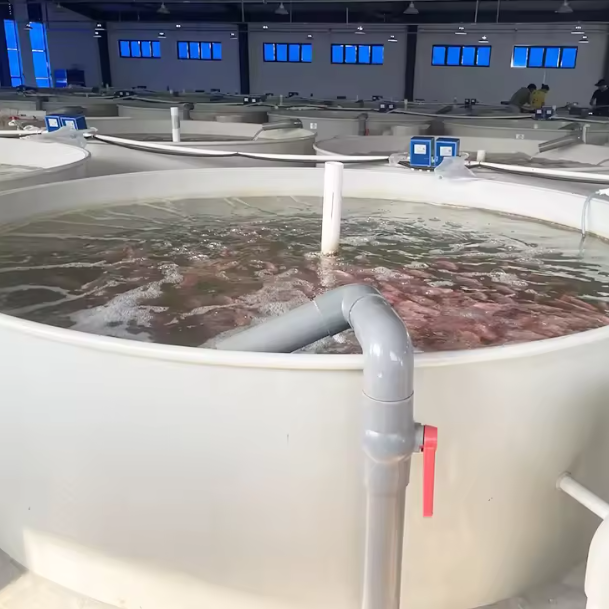
Benefit Analysis: The “Turn-Key” Investment Case for Largemouth Bass (Micropterus salmoides)
Considering the deployment of a standard container unit in Eastern China:
Production Efficiency: Stocking density of 120 kg/m³; growth cycle shortened by 20-30% compared to traditional methods; Feed Conversion Ratio (FCR) improved from 1.2-1.3 to 1.0-1.1.
“Off-Season” Price Premium: Environmental control allows for harvest during winter, when prices are typically 30%-50% higher than the peak season.
“Turn-Key” Attribute: The modular design allows for deployment without major civil works, enabling commissioning within 1-2 months from contract signing—similar to installing a large-scale “appliance”—significantly lowering the technical and time barriers to adoption.
Strategic Vision: From “Intelligent Black Box” to the Future of Agriculture
Container-based intelligent RAS transcends the definition of mere farming equipment. It is a model of the Circular Economy (water recirculation, waste valorization); a pioneer in Smart Agriculture (data as a core production factor); and a powerful tool for Rural Revitalization (creating high-efficiency industries in areas with limited land). It not only provides a rapidly replicable, high-efficiency template for businesses seeking transformation but also represents the inevitable direction for the intensification, industrialization, and sustainable development of aquaculture.
In summary, the essence of the intelligent “black box” is the encapsulation of the uncertain biological processes of agriculture within a precisely controllable, industrial-grade standard unit. What it offers the client is not just a container of fish, but a deterministic solution for the stable production of high-quality aquatic products, and a ticket to the future of competitive aquaculture.
 EN
EN  ES
ES  FR
FR