

Introduction
In Recirculating Aquaculture Systems (RAS), our focus is often on the visible hardware: drum filters, biofilters, and aerators. However, the true architects of system stability and efficiency are communities of “invisible engineers”—the microbiome. A groundbreaking study recently published in Water Research reveals how these microbes function as a coordinated team to efficiently process aquaculture waste, pointing toward a new paradigm for water quality management that moves beyond traditional hardware-centric approaches.
Core Finding: Microbes Operate as a Synergistic “Consortium”
The conventional view treats processes like nitrification, denitrification, and phosphorus removal as relatively separate. However, the latest research from the Chinese Academy of Fishery Sciences demonstrates that in RAS—particularly in shrimp culture systems—the functional genes governing the nitrogen and phosphorus cycles are highly coupled. Their dynamics are driven by synergistic shifts in the underlying microbial communities. Essentially, these systems host a significant population of versatile bacteria capable of simultaneously facilitating the transformation of multiple elements.
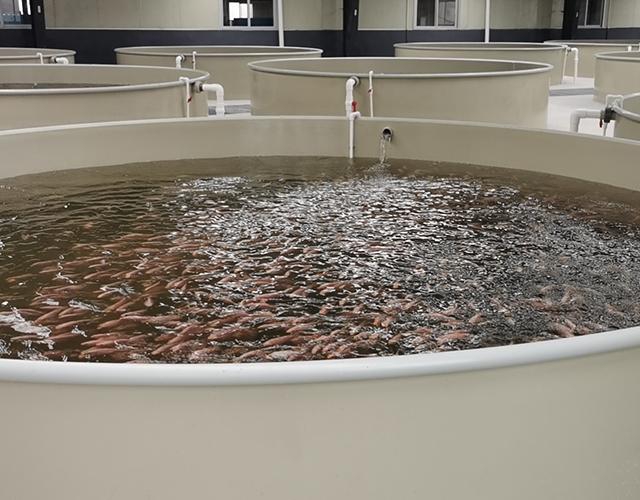
A pivotal finding is that the microorganisms in the culture tank water possess a greater richness of nitrogen and phosphorus cycling functional genes than those in the dedicated biofilter, indicating a strong inherent potential for degrading organic nitrogen and phosphorus. This challenges the traditional assumption that “all purification occurs in the biofilter,” recasting the culture water volume itself as an active in-situ bioreactor.
Innovative Implications for Aquaculture Practice
Shift in Management Priority: From “maintaining equipment” to “managing the microbial community.” System stability relies not just on biofilter media volume, but fundamentally on the health, balance, and diversity of the system-wide microbial ecology.
New Pathway for Regulation: This opens the potential for “synergistic nutrient management” through the targeted application or enhancement of multi-functional probiotic consortia. Such an approach may prove more efficient and stable than separately adding nitrifying bacteria or chemical phosphorus removers.
Optimizing System Design: This discovery provides a scientific basis for developing next-generation, high-efficiency biological water treatment technologies. It could reduce dependence on large, energy-intensive traditional hardware, pushing RAS toward more compact, low-carbon, and efficient designs.
Actionable Recommendations for Professionals
Upgrade Monitoring Protocols: Supplement routine water quality tests (TAN, nitrite, nitrate, phosphate) with periodic monitoring of total bacterial counts and the abundance of key functional bacteria (e.g., via qPCR). This helps build a microbial health profile for the system.
Adopt Microbe-Friendly Practices: Avoid the indiscriminate use of antibiotics and harsh oxidizing disinfectants, which can catastrophically disrupt functional microbial structures. During system cleaning and maintenance, prioritize the preservation of established beneficial biofilms.
Recognize Feed as Microbial Substrate: Understand that feed is not only nutrition for the stock but also the primary carbon and nutrient substrate for the system’s microbial community. Selecting highly digestible feeds reduces the load of refractory organic waste at the source, creating a more favorable environment for the functional microbes to thrive.
 EN
EN  ES
ES  FR
FR