

Traditional farming methods have long been plagued by four critical constraints: dependence on expansive land, reliance on favorable weather conditions, environmental pollution risks, and extensive, labor-intensive management. The container-based recirculating aquaculture system (RAS) offers a disruptive, turnkey solution that addresses these challenges comprehensively.
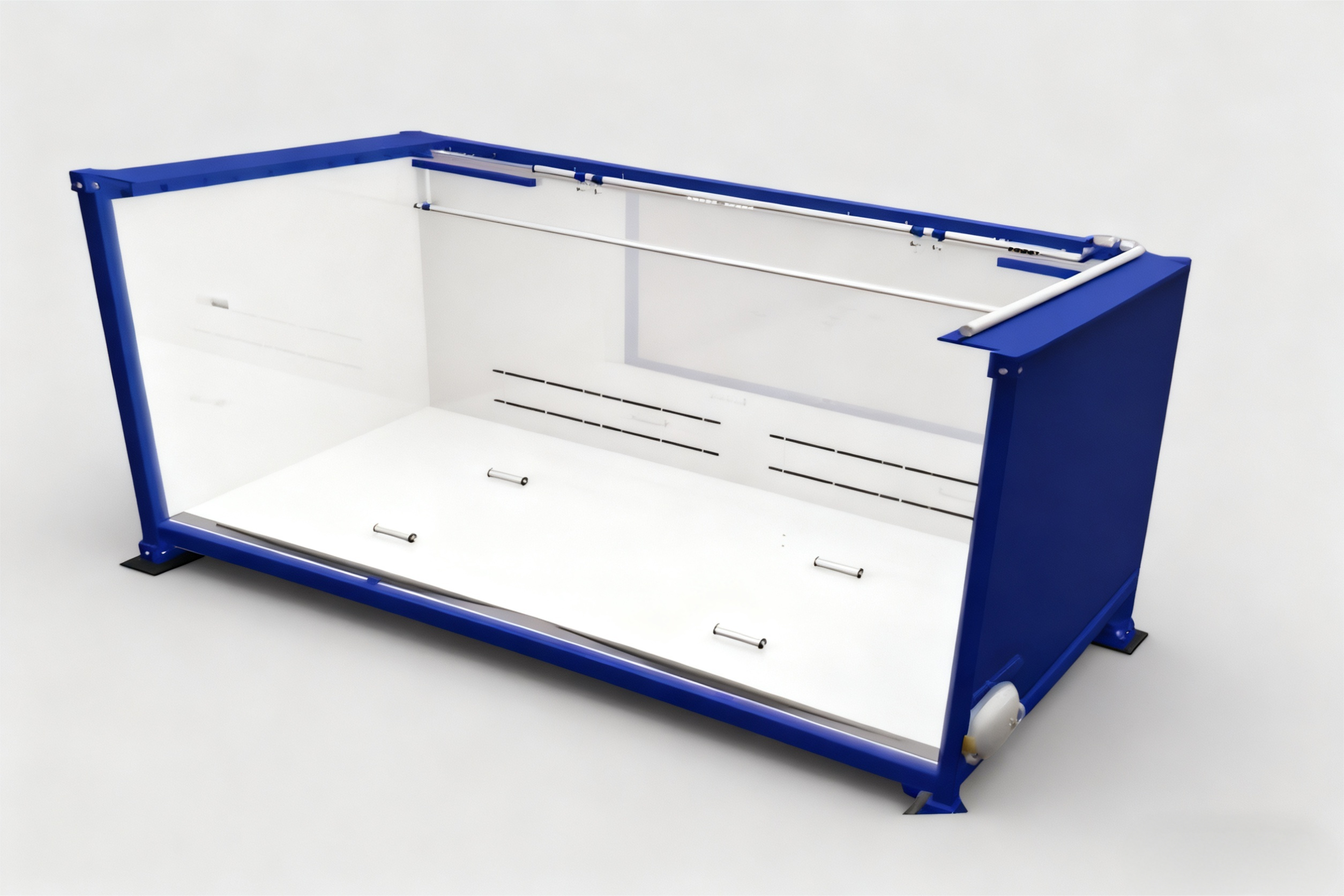
Overcoming Land Dependence for Flexible Siting
Traditional pond aquaculture requires vast tracts of quality land and water resources, limiting suitable sites and hindering expansion.
The Container Solution: Modular farming units built from standardized shipping containers can be deployed on non-arable land such as vacant warehouses, rooftops, or saline-alkali areas. A single 40-foot container, with approximately 25 cubic meters of water volume, can achieve an annual yield equivalent to that of 0.13-0.2 hectares of traditional earthen ponds. This represents a tenfold increase in yield per unit area, fundamentally decoupling production from scarce land resources.
Eliminating Weather Dependency for Year-Round Controlled Production
Extreme temperatures, storms, and sudden oxygen depletion pose constant threats to outdoor ponds.
The Container Solution: The fully enclosed environment, equipped with intelligent temperature control, oxygenation, and lighting systems, maintains optimal conditions year-round. For species like jade perch, this control can reliably reduce the growth cycle from 8-10 months to 6-7 months, enabling consistent, multi-batch, and off-season production, completely independent of climatic variables.
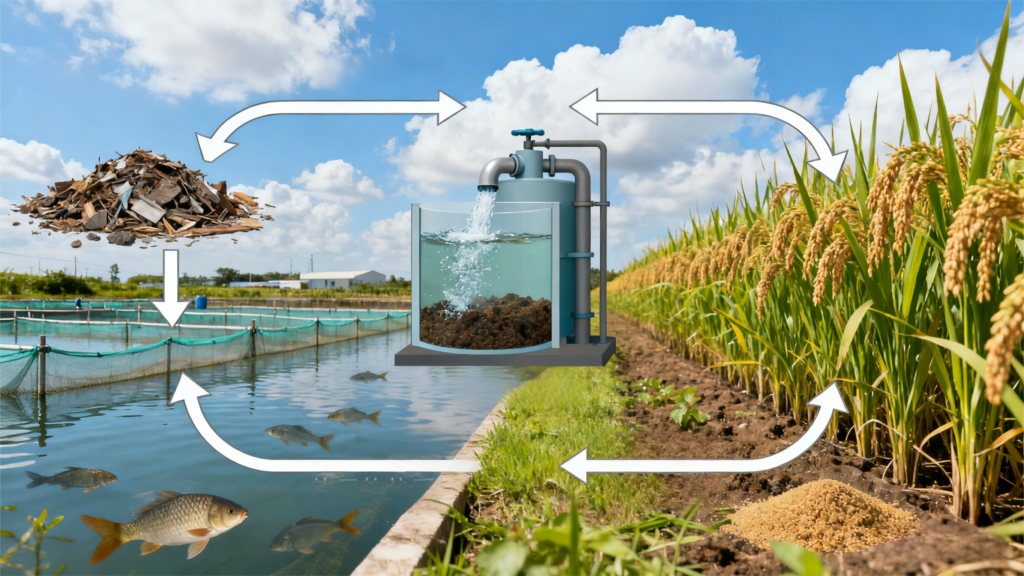
Eradicating Pollution Risks and Embracing Circular Economy Principles
Nutrient-rich effluent from traditional farms is a significant source of non-point pollution, attracting increasing regulatory pressure.
The Container Solution: Integrated, high-efficiency RAS technology utilizes mechanical filtration, biofiltration, and pure oxygen injection to achieve water reuse rates exceeding 95%, requiring only minimal makeup water. Solid waste (sludge) is concentrated and can be converted into organic fertilizer, effectively internalizing waste streams and supporting a “zero-waste” approach aligned with green policies.
Transforming Extensive Management into Smart Agriculture
Traditional farming depends heavily on personal experience, leading to inefficient feeding, pond inspection, disease control, and high operational risk.
The Container Solution: The system is equipped with IoT sensors and a central control unit that monitors key water quality parameters—ammonia nitrogen, nitrite, dissolved oxygen, pH—in real time, enabling automated adjustment. Automatic feeders and AI-based vision recognition systems facilitate precision feeding and early behavioral anomaly detection. A single operator can efficiently manage dozens of container units, dramatically improving management efficiency and risk mitigation.
Core Value and the “Turnkey” Advantage:
“Container-based RAS” is not merely a product but a comprehensive, plug-and-play solution ready for rapid deployment. Clients are not required to integrate complex subsystems for water treatment, climate control, or intelligence. With just a prepared site and utility connections, a fully operational farm can be established in a remarkably short time, significantly lowering the technical and capital barriers to advanced RAS adoption.
Economic Analysis (Using a High-Value Species Model):
A standard container unit can produce approximately 1,500 to 2,000 kilograms of largemouth bass or grouper per production cycle. Through precise environmental and feeding control, the feed conversion ratio (FCR) can be reduced from 1.5-1.8 in traditional systems to 1.1-1.3. Combined with the price premium for off-season harvests (typically 20%-50%), the return on investment presents a compelling case compared to conventional models.
Conclusion
The “Container-based RAS” model transforms aquaculture from a “resource-intensive” agricultural activity into a “technology-driven” modern industrial operation. It is not merely a stopgap measure for land and environmental constraints but a strategic pathway toward smart agriculture, a circular economy, and rural industry revitalization. For aquaculture enterprises and investors seeking transformation, it offers more predictable risk control, superior resource efficiency, and a framework for truly sustainable development.
 EN
EN  ES
ES  FR
FR